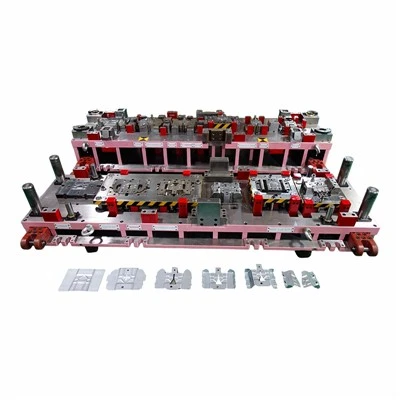
Hey everyone, I’m Jake, and for the last 12 years, I’ve been helping businesses build custom stamping dies that don’t just work—they keep their production lines running without stopping. If you’re here, chances are you’ve either struggled with a die that’s wearing out way too fast, getting inconsistent parts, or dealing with weird hiccups like galling that halts a whole shift. Trust me, I’ve seen it all. Today, let’s cut through the jargon and talk about something that makes or breaks your custom stamping die: picking the right lubricant. Custom Stamping Die

First off, let’s get one thing straight—there’s no “one-size-fits-all” lube for custom stamping dies. I’ve had clients come in thinking, “Oh, WD-40 works for my bike, it’ll work here,” and that’s a fast track to disaster. Stamping dies aren’t household tools; they’re precision pieces that form, cut, bend, or punch metal at insane speeds, often under tons of pressure. The wrong lube can lead to shorter die life, scrap parts, higher tooling costs, and even safety issues if something seizes mid-run. After 12 years of working on custom dies for everything from tiny electronic connectors to heavy automotive chassis parts, I’ve learned the best approach is to start with three big factors: what metal you’re stamping, how your die is set up to process it, and what your production goals are. Let’s break each of these down, and then I’ll walk you through what actually works for different scenarios.
First, the metal. That’s non-negotiable. Different metals have different properties that interact with your die’s tool steel in totally different ways. Let’s say you’re stamping mild steel—super common for things like brackets, appliance parts, or HVAC components. Mild steel is pretty forgiving, but it’s still prone to galling if you don’t use the right lube. Galling is that sticky, abrasive wear where the metal sticks to the die surface, leaving rough spots on both the part and the tool. I’ve seen a mild steel stamping job where a client used a generic cutting oil instead of a light, film-forming lube, and after 2,000 parts, the die was so scratched up they had to re-grind it at a cost of $1,500. For mild steel, I usually recommend a water-soluble semi-synthetic lube. It’s easy to apply (often via a automated spray system), washes off the parts for finishing later, and has just enough lubricity to prevent galling without gumming up your die’s clearance points. If you’re running high-volume production on mild steel—like 100,000+ parts a month—you might step up to a heavy-duty synthetic lube with extreme pressure (EP) additives. Those additives create a tough film that doesn’t break down even under tons of pressure, so your dies last longer and parts stay consistent.
Now, if you’re stamping stainless steel—whether it’s 304 for food equipment or 410 for automotive exhaust parts—forget the water-soluble stuff. Stainless is a bear because it’s work-hardening, and it reacts badly with generic lubes. I had a client stamping small stainless steel brackets for medical devices once; they tried the same semi-synthetic they used for mild steel, and within 5,000 parts, the die had built up a thick layer of stainless residue that required a full teardown and cleaning. That cost them 8 hours of downtime and $800 in labor, not to mention missing a delivery deadline. For stainless, you need a lube that’s slick and can handle that work-hardening. I prefer a pure synthetic polymer-based lube for most stainless jobs. It’s thicker than semi-synthetics, doesn’t wash off as easily, and the polymer film adheres to both the stainless part and the die surface to prevent that galling and residue buildup. For high-heat stamping operations on stainless—like hot stamping for heavy truck parts—you need a dry film lube with molybdenum disulfide (moly) or graphite. Those solid lubricants can stand up to 1,000°F+ temperatures without breaking down, which liquid lubes definitely can’t do. I’ve seen these used on custom hot stamping dies for chassis parts, and they cut die wear by 40% compared to liquid lubes for that application.
Then there’s aluminum, which is super popular right now for electric vehicle (EV) parts, consumer electronics, and lightweight aerospace components. Aluminum is soft, but it’s also prone to smearing on die surfaces, leading to inconsistent part dimensions. I had an EV parts client stamping aluminum battery housings a while back—they tried a light oil, and the aluminum smeared all over the die, making every third part scrap. We switched to a synthetic ester-based lube, and that fixed it immediately. Esters have a high lubricity index, so they reduce friction between the aluminum and the die, and they don’t leave that sticky residue that causes smearing. For aluminum foil or very thin aluminum sheet (like under 0.5mm), you might even use a dry Teflon-based lube. It’s super thin, doesn’t affect the part’s thickness, and prevents smearing without adding any extra material you have to clean off later.
Okay, so metal is half the equation. The other half is your die’s design and your production setup. Let’s talk about that, because two custom dies that look similar can need totally different lubes. For example, if your die is a blanking die—all it does is cut metal into flat shapes—you need a lube that’s focused on reducing friction between the punch and the die cavity, to keep edges sharp and prevent burrs. Blanking dies run at high speeds, so the lube can’t dry out or break down mid-run. I usually recommend a light-to-medium EP oil here, applied via a drip or spray system. For forming dies—like bending, drawing, or deep drawing dies—those are way higher pressure, because you’re stretching metal into a shape, not just cutting it. Deep drawing dies, for example, pull metal into a cup shape, and the wall of the cup is rubbing against the die wall the whole time. If your lube can’t handle that pressure, the metal will tear, or the die will wear out in weeks. For deep drawing, I swear by heavy-duty EP synthetic lubes, or even a paste lube for very deep draws where the pressure is extreme. I had a client deep drawing stainless steel cups for water heaters—they tried a regular oil, and after 10,000 cups, the die wall was so worn the cups had leaks. Switched to a graphite-based paste lube, and they got 80,000+ cups out of the same die before needing a touch-up. That’s a huge difference.
Then there’s production volume. If you’re a small shop running 1,000 parts a week, you don’t want to drop $500 on a industrial-grade synthetic lube that’s overkill. For low-volume prototype runs, a good quality penetrating oil (like a synthetic blend, not generic WD-40) works fine, and it’s easy to apply with a brush or spray bottle. But if you’re running high-volume production—like 10,000+ parts a day—you need a lube that’s designed for automated application, is cost-effective per part, and doesn’t cause buildup that requires frequent die cleaning. Automated spray systems for lubes aren’t that expensive, and they ensure a consistent amount of lube is applied every time, which is way better than hand-applying (which often leads to over-lubing or under-lubing, both bad). For high-volume jobs, semi-synthetic lubes are usually the sweet spot—they balance performance, cost, and ease of use.
Wait, let’s not forget about specialty cases. What if you’re stamping pre-coated metal? Like galvanized steel, or powder-coated sheet metal? Those have a surface coating that you can’t damage, so generic lubes that are oily or acidic can ruin the coating, leading to rust or finish issues. I had a client stamping galvanized steel parts for outdoor fences—they used a regular oil, and the oil reacted with the zinc coating, leaving dull spots that made the parts unmarketable. For pre-coated metals, you need a lube that’s non-reactive with the coating. I recommend a water-soluble lube specifically formulated for coated metals—it’s pH-neutral, washes off easily, and doesn’t affect the zinc or powder coat. Another specialty case: food-grade parts. If you’re stamping metal for food processing equipment, medical devices, or packaging that touches food, you need a lube that meets FDA or USDA standards. Those are usually food-grade synthetic lubes, no harsh additives, so they don’t contaminate the product. That’s non-negotiable for regulated industries—I’ve had to rework a whole custom die for a food client because they used a lube that wasn’t food-grade, and that’s a costly mistake you can’t afford to make.
Now, let’s talk about common mistakes I see all the time, because even if you pick the right general type, small mistakes can mess things up. First, over-lubing. I see this so much—people think more lube = better protection, but that’s not true. Too much lube can get dragged into the die’s clearance points, leading to buildup, which causes scrap parts. It can also make the die run hotter, which speeds up wear. Same with under-lubing—too little and you get friction, galling, and die failure. The key is consistent, precise application, which is why automated systems are worth the investment. Another mistake is not changing your lube when you switch metals. If you were stamping mild steel and now switch to stainless steel, don’t just keep using the same lube—adjust it to handle the new metal’s properties. I’ve had clients run a batch of stainless parts with old lube, and it cost them a month of production because of all the scrap. Also, don’t forget to clean your dies regularly—lubes can leave residue over time, even the good ones, and that residue will cause problems. A quick cleaning with a non-abrasive solvent every few runs (depending on volume) keeps your die running smoothly.
At the end of the day, picking the right lubricant for your custom stamping die isn’t rocket science, but it does require knowing your specific setup, material, and production needs. The last thing I want is for a client to waste money on premature die replacement, scrap parts, or downtime because they picked the wrong lube. I’ve built thousands of custom stamping dies over the years, and I always factor in the lube requirements upfront when designing the die—because if the lube doesn’t work, the die won’t work, no matter how well we built it.
If you’re currently dealing with die wear, scrap parts, or just want to make sure you’re using the best lube for your custom stamping die, hit me up. I don’t do generic advice—we’ll talk through your specific metal, production volume, die design, and goals, and help you figure out exactly what lube (and how to apply it) will make your operation more efficient, cut costs, and keep your dies running for longer. No pressure, just real advice from someone who’s been in the stamping game for way too long, and loves helping people solve their die problems.
Metal Stamping Dies References:
- American Iron and Steel Institute. (2020). Lubrication Guidelines for Metal Stamping and Forming. AISI Pressworking Committee.
- Die Technology Research Center. (2021). Selection Criteria for Lubricants in Custom Stamping Dies. University of Manufacturing Technology.
- Food and Drug Administration. (2022). Compounded Adhesives and Lubricants for Food-Contact Surfaces. FDA CFR Title 21.
- Stamping Industry Association. (2019). Best Practices for Lubrication in High-Volume Stamping Operations. SIA Technical Report No. 17.
Dongguan Changdong Tool & Die Co., Ltd.
With abundant experience, we are one of the most reliable custom stamping die manufacturers and suppliers in China. Please feel free to buy advanced custom stamping die made in China here from our factory. Good service and quality products are available.
Address: No. 56-B, Fumin South Road, Dalang Town, Dongguan City, Guangdong Province, China
E-mail: sales@stamping-die.com
WebSite: https://www.metalstampingdie.com/
