Hey there! I’m a supplier of CNC turning services, and today I wanna chat about a pretty interesting topic: Can CNC turning services work with magnetic materials? CNC Turning Services
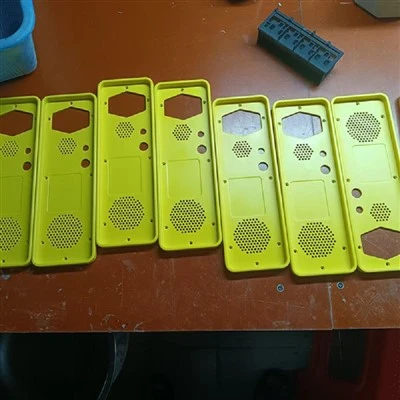
First off, let’s talk a bit about what CNC turning is. CNC, or Computer Numerical Control, turning is a manufacturing process where a lathe is controlled by a computer to shape a workpiece. It’s super precise and efficient, and it’s used a ton in the manufacturing industry to make all sorts of parts.
Now, magnetic materials. These are materials that can be magnetized or are attracted to a magnet. Common magnetic materials include iron, nickel, cobalt, and some of their alloys. They’re used in a wide range of applications, from electronics and motors to medical devices and aerospace components.
So, can we use CNC turning services on these magnetic materials? The short answer is yes, but there are some things to keep in mind.
Advantages of CNC Turning Magnetic Materials
One of the big advantages of using CNC turning for magnetic materials is the precision it offers. Magnetic parts often need to be made with very tight tolerances to work properly. For example, in a motor, the magnetic components need to fit together just right to ensure efficient operation. CNC turning can achieve these tight tolerances consistently, making it a great choice for manufacturing these parts.
Another advantage is the ability to work with complex geometries. Magnetic materials are used in all kinds of shapes and sizes, and CNC turning can handle them all. Whether it’s a simple cylinder or a more intricate shape with multiple features, the computer-controlled lathe can create the part exactly as designed.
CNC turning is also a very efficient process. It can produce parts quickly, which is important for meeting production deadlines. And since it’s automated, it reduces the chances of human error, resulting in higher quality parts overall.
Challenges of CNC Turning Magnetic Materials
Of course, it’s not all sunshine and rainbows. There are some challenges when it comes to CNC turning magnetic materials.
One of the main challenges is chip management. Magnetic materials tend to produce long, stringy chips during the turning process. These chips can get tangled around the cutting tool and the workpiece, causing damage to both. To deal with this, we often use special cutting tools and techniques to break up the chips into smaller, more manageable pieces. For example, we might use a different cutting speed or feed rate, or we might use a chip breaker on the tool.
Another challenge is the magnetic properties of the materials themselves. The magnetic field can attract metal particles and debris, which can contaminate the machining area and affect the quality of the finished part. To prevent this, we need to keep the machining area clean and use proper filtration systems to remove any magnetic particles from the coolant and the air.
Heat generation is also a concern. The cutting process generates a lot of heat, and magnetic materials can be sensitive to high temperatures. Excessive heat can change the magnetic properties of the material and cause it to lose its magnetism. To control the heat, we use coolants and lubricants during the machining process. These help to reduce friction and carry away the heat, keeping the temperature of the workpiece within an acceptable range.
Tips for Successful CNC Turning of Magnetic Materials
If you’re thinking about using CNC turning services for magnetic materials, here are some tips to keep in mind.
First, choose the right cutting tool. The tool material and geometry can have a big impact on the machining process. For magnetic materials, we usually recommend using carbide tools, as they’re hard and can withstand the high cutting forces. The tool geometry should also be optimized for the specific material and the desired finish.
Second, pay attention to the cutting parameters. The cutting speed, feed rate, and depth of cut all need to be carefully selected to ensure a good balance between productivity and quality. Too high a cutting speed can cause excessive tool wear and heat generation, while too low a speed can result in a poor surface finish.
Third, make sure to use proper coolant and lubrication. As I mentioned earlier, this is crucial for controlling heat and reducing friction. The coolant should also be compatible with the magnetic material to prevent any chemical reactions.
Finally, keep the machining area clean. Regularly remove any chips and debris from the lathe and the surrounding area. Use a magnetic separator or a filter to remove magnetic particles from the coolant.
Real – World Applications
Let’s take a look at some real – world applications where CNC turning of magnetic materials is used.
In the automotive industry, magnetic materials are used in electric motors and sensors. CNC turning is used to make the rotors and stators of these motors, as well as the magnetic cores of the sensors. The precision and reliability of CNC turning ensure that these components work properly and contribute to the overall performance of the vehicle.
In the electronics industry, magnetic materials are used in transformers, inductors, and magnetic recording heads. CNC turning can produce these components with the high precision required for their applications. For example, in a hard drive, the magnetic head needs to be incredibly precise to read and write data accurately.
In the medical field, magnetic materials are used in MRI machines and other diagnostic equipment. CNC turning is used to manufacture the components of these machines, ensuring that they meet the strict quality and safety standards.
Conclusion
So, to sum it up, CNC turning services can definitely work with magnetic materials. There are some challenges, but with the right tools, techniques, and precautions, we can overcome them and produce high – quality parts.
Vacuum Casting Services If you’re in the market for CNC turning services for magnetic materials, I’d love to have a chat with you. Whether you have a small prototype project or a large – scale production run, we have the expertise and the equipment to handle it. Feel free to reach out and we can discuss your specific needs and see how we can help you achieve your manufacturing goals.
References
- "Manufacturing Engineering and Technology" by S. Kalpakjian and S. Schmid
- "CNC Programming Handbook" by Peter Smid
Shenzhen Multi-Wins Precision Technology Co., Ltd.
As one of the most professional CNC turning manufacturers and suppliers in China, we have world-leading production equipment and strong manufacturing capabilities. Please feel free to buy customized CNC turning made in China here from our factory. Also, quotation is available.
Address: 1 Phase, Yi’an City Central Garden, Longfei Avenue, Longgang District, Shenzhen, GD, China. 518100
E-mail: info@multi-wins.com
WebSite: https://www.multi-wins.com/
