If you’re running a shop that relies on large high frequency welding machines (HF welders) for thick materials like heavy vinyl, PVC, or even industrial metal fabrics, you know how easy it is to hit a wall after 5+ years of use. I’ve been in the HF welding supplier game for over a decade, and let me tell you—most of the time, you don’t need to buy a whole new machine. Upgrading is way more cost-effective, and it fixes most of the headaches that come with old gear. I’ve walked dozens of regular shops through this, so I’m breaking down what actually works, no fluff. Large High Frequency Welding Machine

First, let’s cut through the myth: upgrading a large HF welder isn’t just swapping out parts. It’s matching the upgrade to your exact problem. If your old machine cuts out mid-weld on ¼-inch PVC, or it’s so finicky you have to tweak settings every time you switch materials, that’s not a broken machine—that’s a component or control upgrade. I’ve seen shops drop $20k on a brand-new machine when a $1.2k replacement capacitor and a software update would’ve done the trick. So start by diagnosing the exact issue first. Let’s cover the most common pain points and the upgrades that fix ’em.
The biggest upgrade most large HF welders need is the power supply. Old models—especially the ones made pre-2010—use analog power supplies that run on 50/60 Hz grid power, which wastes a ton of energy and gives inconsistent welds. Large HF welders, the ones with 10kW+ power output, are supposed to run on high-frequency (usually 27.12 MHz, the approved industrial band) to heat materials evenly across big surfaces. Analog power supplies can’t hold a stable frequency, so you’ll get weak spots along the edges of your welds, or even burn-through on thin areas. Swapping to a solid-state digital power supply is a game-changer here. Digital units regulate frequency and power in real time—no more guessing. I’ve had a shop that used to scrap 15% of their heavy vinyl truck tarps per month cut that scrap to 2% after a digital power supply upgrade. It pays for itself in 6 months just from reduced material waste.
Next up: the control system. If you’re still using a knobs-and-dial control panel from the 90s, you’re wasting way too much time adjusting settings. Old controls can’t save multiple weld presets, so if you switch between welding vinyl upholstery, thick banner material, and reinforced tarps, you’re fumbling with knobs every single time. Upgrading to a PLC (programmable logic controller) with a touchscreen panel solves that. You can program custom presets for each material, input the material thickness, and the control automatically sets frequency, power, and cycle time. I once had a operator tell me he saved 2 hours every day just from not re-calibrating settings between jobs. For large machines with big work areas (think 8-foot wide beds), you can even add an automated positioning system to the touchscreen—so you can set the weld path without manually moving the material every time. That cuts down on human error too.
Then there’s the electrode upgrade. Old electrodes, especially the big flat ones used for large-area welding, wear out fast. They get scratched, corroded, or lose their shape over time, which leads to uneven welds. Most people just buy generic replacement electrodes, but upgrading to precision-machined, hardened copper electrodes makes a huge difference. Some suppliers even offer textured electrodes for certain materials—like for vinyl, a slightly textured electrode prevents the material from sticking, which is a big win for high-volume shops. Wait, and don’t sleep on electrode alignment. A lot of old machines have loose electrode brackets, so even a new electrode won’t help if it’s not lined up perfectly. Add an adjustable alignment kit when you upgrade electrodes, and you’ll get consistent welds across the entire work surface, even on the biggest jobs.
Cooling systems are another area that gets ignored until your machine overheats and shuts down mid-job. Large HF welders generate a ton of heat, especially if they’re running 8+ hours a day. Old air-cooled systems usually aren’t enough for 10kW+ machines—they overwork, get clogged with dust, and fail. If you’re regularly seeing your machine trigger overheat alarms, upgrading to a closed-loop water cooling system is non-negotiable. Closed-loop systems don’t pull in dusty shop air, so they last longer and maintain consistent temperatures. I’ve seen shops that ran their old air-cooled machines 12 hours a day get a year of life out of them before they died, and with a water cooling upgrade, they’re still going strong after 5 years. Also, adding a temperature sensor that automatically adjusts cooling flow based on power output is a nice touch—no more wasting energy on over-cooling.
Now, what about the big stuff: if your machine has a worn-out work bed or frame? Wait, most large HF welders have heavy-duty steel frames, but if yours has rusted or warped from years of heavy use, a work bed upgrade might be in order. The work bed is the surface that supports your material during welding, and if it’s warped, the electrode won’t make full contact with the material, leading to weak welds. You can either resurface the existing work bed (if it’s not too far gone) or upgrade to a Teflon-coated aluminum work bed. Teflon coating prevents materials from sticking, and aluminum is more durable than steel for high-use areas. For shops that run a lot of thin materials, a perforated work bed is another option—it creates a slight vacuum that holds the material flat, which is perfect for banner or tarp welding.
Wait, let’s talk about common mistakes people make when upgrading. First, don’t over-upgrade. If your machine only runs 4 hours a day and you’re welding light PVC, a $5k power supply upgrade is a waste. Stick to the problem you actually have: if your issue is inconsistent welds, go for digital power and control. If you’re overheating, do cooling. Second, make sure any upgrade parts are compatible with your machine. A lot of cheap generic parts online won’t fit right, or won’t work with your existing system. I’ve had a shop try a random digital power supply from Amazon, and it fried their old transformer because the voltage didn’t match. Third, don’t skip calibration. Even if you install all the right parts, you need to calibrate the new control system and frequency to make sure it’s within the industrial HF band (27.12 MHz, plus/minus 60 kHz—too far off and you can damage materials or violate industrial regulations). Most suppliers (including mine, obviously) offer calibration services as part of the upgrade, which is worth every penny.
Also, if you’re looking to future-proof, there are a couple of add-on upgrades that don’t cost a lot but pay off big. One is an RFID preset system—you can tag your material rolls with RFID chips, so the machine automatically pulls the right preset when you load a new roll. No more typing in material thickness or hunting for the right preset. Another is remote monitoring: add a small sensor to your machine that tracks runtime, temperature, and power usage. You can get alerts if a part is about to fail, so you can replace it before it breaks down mid-job. For shops with multiple locations, you can even track all your welders from a single dashboard.
Let me throw in a real example to make this concrete. Last year, a large industrial sign shop reached out to me. They had a 12-year-old 15kW HF welder, and they were running into so many issues: welds were weak, they had to stop every hour to clear burnt material, and they were replacing electrodes every 2 weeks. We did a diagnostic, and found their analog power supply was fluctuating by 10% in frequency, their control panel had no presets, and their air cooling system was clogged with vinyl dust. We upgraded them to a digital 15kW power supply, a PLC touchscreen control with 10 custom presets, a closed-loop water cooling system, and precision copper electrodes with Teflon coating. Total cost? $7,800. Their results? Scrap rate went from 12% to 2.5%, electrode lifespan went to 8 weeks, and operator time on setup cut by 3 hours a day. They paid for the upgrade in 4 months. That’s way better than dropping $28k on a new machine.
Now, who should consider upgrading vs. replacing? If your machine is less than 10 years old, and the frame is solid, upgrading is almost always better. New large HF welders are expensive, and most of the core tech (transformers, work frames) is pretty standard. If your machine is 15+ years old, or has major frame damage, or you’re needing to run way higher power than it was designed for, then a new machine might be the call. But even then, you can often upgrade a new machine with extra features that are worth it.
Wait, let’s address a concern I hear all the time: “Upgrades are too complicated, I don’t know how to install them.” Most of the major upgrades (power supplies, control panels, cooling systems) are designed to be swapped out without major rewiring, especially if you work with a reputable supplier. We send a tech to install and calibrate, so you don’t have to mess with high-voltage wiring (which is dangerous, by the way—don’t DIY that part). Smaller upgrades, like electrodes or alignment kits, are easy to install with basic tools, but again, ask for a quick guide from your supplier if you’re unsure.
So, to wrap this up: upgrading your large HF welding machine doesn’t have to be overwhelming. Start with a clear diagnostic of what’s actually wrong, pick upgrades that target that issue, avoid generic cheap parts, and work with a supplier that knows large HF welders inside and out. It’s way cheaper, faster, and less disruptive than buying a whole new machine, and you’ll get better, more consistent welds that save you money on scrap and labor.
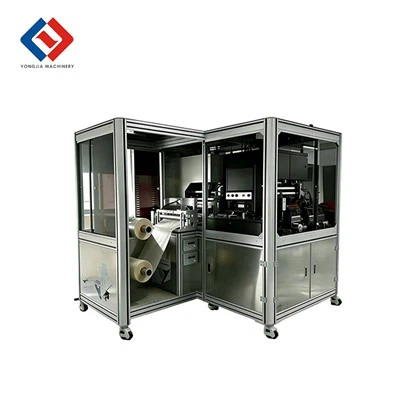
If you’re ready to stop dealing with finicky welds and overheating machines, or you want to run a diagnostic on your current setup to see what upgrades make sense for you, reach out to us to connect with our team. We’ll walk you through exactly what your machine needs, no pushy sales stuff, just straight talk based on years of working with large HF welders every day. Don’t let your old machine hold your shop back—upgrade smart, upgrade today.
Shuttle Table HF Welding Machine References:
- Industrial High Frequency Welding Equipment Safety and Performance Standards, ISO 11453:2019
- High Frequency Welding Machine Component Upgrade Best Practices, International Association of Welding Manufacturers (IAWM) 2022 Industry Report
- Energy Efficiency for Industrial Welding Equipment, U.S. Department of Energy Office of Industrial Technologies, 2021
- Maintenance and Upgrade Guidelines for Large Format HF Welding Systems, North American Industrial Fabric Association (NAIFA), 2020
Dongguan Yongjia Machinery Equipment Co., Ltd.
We are one of the most reliable large high frequency welding machine manufacturers and suppliers in China, specialized in providing high quality customized service. Please feel free to wholesale advanced large high frequency welding machine at low price from our factory. For quotation, contact us now.
Address: No. 240, Chashan South Road, Chashan Town, Dongguan City, Guangdong Province, China
E-mail: info@yjwelding.com
WebSite: https://www.yjhighfrequencymachine.com/
