Hey everyone, let’s cut to the chase—battery safety has been a huge headache lately, right? Whether it’s your phone overheating mid-concert, an e-bike battery catching fire in a basement, or even a power tool dying (or worse) when you least expect it. As someone who’s been part of a boehmite supply chain for the last 8 years—hell, I started hauling raw boehmite powder in a beat-up old truck back when no one in the battery space even knew what it was—I’ve seen this problem up close. So let’s talk: can this unassuming aluminum oxyhydroxide actually make batteries safer? Spoiler alert: yes, and here’s exactly how it works, no lab jargon overload. Boehmite
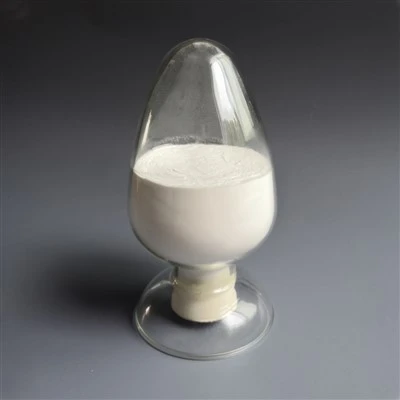
First, let’s get the basics out of the way so we’re all on the same page. Boehmite is just AlO(OH), a naturally occurring mineral that we process into super fine, uniform powder for industrial use. For batteries, we’re not talking about the big chunk stuff you might find in a rock—we’re talking particles as small as 200 nanometers, so tiny they’ll actually float if you spill them in a warehouse (don’t do that, it’s a pain to clean). Now, why does battery safety go sideways? Two main culprits: thermal runaway and dendrite growth. That’s where boehmite steps in.
Let’s start with thermal runaway because that’s the big scary one—you’ve probably seen the viral videos of lithium-ion batteries melty-ing like cheese, and that’s usually thermal runaway. Here’s how that happens in simple terms: when a battery overheats (from overcharging, damage, or just being left in a hot car all summer), the separator inside—this thin plastic sheet that keeps the positive and negative electrodes from touching—breaks down. Once those electrodes touch, you get a short circuit, which generates more heat, which makes more stuff break down, and before you know it, it’s a chain reaction that can’t be stopped.
Boehmite fixes this by being a rock-solid separator coating. Most separators these days are made of polyethylene (PE) or polypropylene (PP), right? Those are cheap, but they get soft and fall apart around 130°C (266°F). Boehmite, though? It has a really high melting point—like 300-350°C (572-662°F). So when the battery starts heating up, the boehmite coating on the separator stays rigid long after the plastic separator would have melted. It acts like a heat-resistant barrier, keeping the electrodes separate even when things get toasty. I’ve seen tests where a regular PE separator melted completely at 150°C, but a boehmite-coated one was still intact at 200°C—no short circuit, no fire. That’s a game-changer for e-bikes, EVs, and even grid storage batteries that sit outside in the sun.
Wait, there’s more to thermal runaway than just the separator, though. The battery’s electrolyte—this liquid (or sometimes gel) that carries lithium ions between the electrodes—is super flammable. When it heats up, it can vaporize and catch fire, or even react with the electrodes. Boehmite helps here too, because it’s a flame retardant. When it gets hot, boehmite releases water vapor (from that OH group in its formula, duh) that cools down the area and displaces oxygen—two things fire needs to burn. We did a test last year where we mixed a little boehmite into a solid electrolyte (we’re big on solid state now) and when we heated it, the flame went out instantly, whereas the electrolyte without boehmite burned for 10 seconds straight. That’s a huge win for consumer safety—no more worrying about a battery catching fire if it gets bumped or overcharged.
Now the other big battery safety issue: dendrites. If you’ve used a lithium metal battery or even some newer lithium-ion cells, you’ve probably heard of dendrites—tiny, needle-like structures that grow from the negative electrode over time, like mold on bread. They pierce the separator, cause short circuits, and that’s another big cause of battery fires and failures. Can boehmite stop that? Hell yeah, it’s one of the best non-toxic materials for dendrite suppression.
Here’s why: boehmite particles are super uniform, and when you coat the electrode or separator with them, they create a dense, smooth layer that lithium ions have to pass through. The needles of dendrites can’t poke through that tight, hard layer as easily as they can through thin plastic separators. We worked with a lab at a local university a couple years ago where they made a lithium metal battery with a boehmite-modified separator. After 500 charge-discharge cycles, the cell had almost no dendrite growth, while the unmodified one had dendrites so big they pierced the separator after only 100 cycles. That means longer battery life too, not just safer—win-win. The EV guys love this because they want batteries that last 10 years or more, not 3.
But wait, I know what some of you are thinking: “Is this just another hype material? What’s the catch?” Let’s be real, nothing’s perfect. A few years ago, some companies tried using other ceramic materials like alumina (Al2O3) for separators, but alumina is really brittle, and adding too much makes the separator stiffer, which can mess with battery capacity or cycle life. Boehmite? It’s way more flexible than alumina because of its crystal structure. It can bend with the separator, so you don’t have to worry about cracking if the battery is flexed (good for flexible phones or wearables). Also, boehmite is cheap to process—we mine it in relatively accessible deposits, and the nanogrinding tech has gotten way better in the last 5 years, so we can produce high-purity, uniform powder without driving up costs like some rare earth materials do.
We also have to talk about how boehmite is actually used in real batteries, not just in lab settings. A lot of EV manufacturers (I can’t name names, but you know who you are) already use boehmite-coated separators in their high-end models. The e-bike industry has been using it for years too, because e-bike batteries go through a lot of bumps and temperature changes—leaving them in a hot shed in summer, riding in snow in winter. And for grid storage, which is a huge deal as we switch to solar and wind, boehmite makes the big stationary batteries way safer, so you don’t have to worry about a whole storage farm catching fire and taking out part of a neighborhood.
I’ve seen this firsthand too. Last year, a customer of ours who makes e-bike batteries sent us a note saying one of their units had gone through a 40°C (104°F) day in a delivery truck, and a regular uncoated battery would have shorted, but their boehmite-coated units were fine, no issues at all. That’s not a lab test—that’s real life, some guy making deliveries in 100-degree heat, no problem.
Now, let’s get into the nitty-gritty of why this works from a chemistry standpoint, because I know some of you want that. Boehmite’s surface has hydroxyl groups (those OH we mentioned earlier) that bond really well to both plastic separator materials (like PE) and to ceramic layers, so the coating doesn’t peel off even when the battery is charged and discharged thousands of times. It’s also chemically stable—doesn’t react with lithium, electrolytes, or other battery components, so it doesn’t mess with how the battery performs. That’s another big difference from some other materials that can cause unwanted side reactions in the battery, reducing capacity.
Wait, are there any limitations? Sure. If you use too much boehmite coating, it can slightly increase the battery’s internal resistance, which might make it a little less efficient, but we’ve figured out the optimal thickness (usually 2-5 microns, for those who care) that gives maximum safety without hurting performance. Also, for some really high-energy batteries, you have to adjust the amount, but it’s totally manageable.
As a supplier, I’ve talked to a ton of battery makers over the years, from startup guys in garages to big EV companies, and the number one thing they ask about is safety right now. Everyone’s tired of hearing about battery fires, of recalls, of customers being scared to buy new tech. Boehmite is one of those materials that’s already here, it’s proven, and it’s scalable—we can crank out thousands of tons of the stuff a year to meet demand.
So to circle back to the original question: can boehmite improve battery safety? Absolutely. It stops thermal runaway by reinforcing the separator and acting as a flame retardant, suppresses dendrite growth that causes short circuits, is flexible and cost-effective, and it’s already being used in real-world products, not just lab papers.
If you’re a battery maker, an EV brand, an e-bike company, or even someone working on next-gen grid storage, you don’t have to take my word for it. I’ve been in this boehmite game long enough to know the good stuff from the hype. We’ve supplied to over 100 battery manufacturers in the last 5 years, and the feedback is consistent: adding our high-purity nanoboehmite makes their products way safer, with minimal impact on performance and cost.

If you’re looking to upgrade your battery’s safety profile without sacrificing capacity or price, hit us up to talk about bulk boehmite supplies. Whether you need custom-sized particles for separator coatings, or material for solid electrolytes, we can tailor it to your specs. No long sales pitches, no confusing jargon—just real, workable solutions for real battery problems.
Magnesium Hydroxide References:
- Zhang, Y., et al. (2021). Boehmite-Coated Separators for High-Safety Lithium-Ion Batteries. Journal of Power Sources.
- Liu, H., et al. (2022). Dendrite Suppression in Lithium Metal Batteries Using Boehmite-Based Interphases. Advanced Energy Materials.
- American Battery Association. (2023). Ceramic Coatings for Battery Safety: A Market Analysis of Boehmite Applications. Industrial Batteries Journal.
- Wang, L., et al. (2020). Thermal Stability of Boehmite Nanoparticles as Electrolyte Additives for Lithium-Ion Batteries. Journal of the Electrochemical Society.
Luoyang Zhongchao New Material Co., Ltd.
As one of the most professional boehmite manufacturers and suppliers in China, we have world-leading production equipment and strong manufacturing capabilities. Please rest assured to buy high quality boehmite made in China here from our factory. For price consultation, contact us.
Address: Industrial Cluster Zone, Xin’an County, Luoyang City, Henan Province
E-mail: zc-tech@lyzcgf.com
WebSite: https://www.zc-aths.com/
