If you’ve ever stopped to think about the pipes running under your office building, the scaffolding holding up a window washers’ platform downtown, or the frames of the farming equipment that feeds your community, you’ve almost certainly encountered a round steel pipe. I’ve been a round steel pipe supplier for 12 years now, and one of the most common questions I hear from first-time buyers—whether they’re a small contractor or a civil engineering lead planning a multi-million dollar project—isn’t just “how much does this cost?” It’s “why round steel pipe? Why not square, rectangular, or even a solid steel bar for my application?” Round Steel Pipe
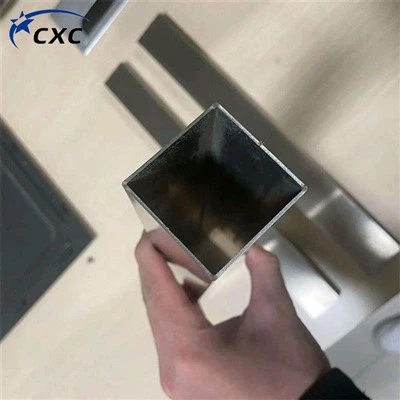
The short answer, of course, is strength. But that’s a surface-level answer. Strength in round steel pipes isn’t a random happy accident of the shape; it’s a result of basic physics, metallurgy, and decades of engineering testing that has shaped every modern industry that relies on structural steel. What I’ve learned over the years talking to customers is that most people only grasp a fraction of what makes this shape so strong, and that gap often leads to them underestimating how a small choice in pipe shape can mean the difference between a project that stands for 50 years and one that needs costly repairs in a decade.
Let’s start with the simplest, most intuitive type of strength: resistance to internal pressure. If you’ve ever used a balloon or blown up a beach ball, you know that curved surfaces distribute force evenly. Now scale that up to high-pressure pipelines—think of the pipes that carry natural gas from wellheads to local utilities, or the pipes that move pressurized water through municipal water systems, or even the pipes that carry hydraulic fluid in construction equipment. These systems are under constant, sometimes extreme, internal stress that would cause a square or rectangular pipe to fail much faster than a round one. A square pipe has sharp corners, and those corners act as stress concentrators. That means all the force from the internal pressure pulls hardest at those sharp points, making them far more likely to crack or split over time. Round steel pipes, by contrast, have no corners. The pressure pushing out from the inside is spread equally across every part of the pipe wall, like a gentle, even squeeze. I’ve supplied pipes for rural natural gas projects in the Midwest, and the engineers working on those projects will tell you that round steel pipe is the only shape that meets the American Society of Mechanical Engineers (ASME) standards for sustained high-pressure service, because it can handle more internal force per unit of wall thickness than any other shape.
That same principle applies to bending and torsion too—two other critical types of strength that matter for structural applications like scaffolding, building frames, and farm equipment. Let’s talk about bending first. If you take a 10-foot-long piece of round pipe and a 10-foot-long piece of square pipe that have the exact same outer diameter and same wall thickness, and you put the same weight on both ends to see which bends more, the round pipe will win every time. Why? It comes down to the moment of inertia, a term engineers use to describe how well a shape resists bending. For a given amount of material, a round shape places more of that material farther from the center of the pipe. That means when a force tries to bend the pipe, the material on the outer edge has to work harder, and the pipe is far more resistant to bending. A square or rectangular pipe, by comparison, has most of its material closer to its center, especially if it’s the same outer size as a round pipe. To get the same bending strength as a round pipe, a square pipe would need much thicker walls, which adds weight, cost, and takes up more space.
I remember a customer a few years back who owned a small landscaping and hardscaping business in Texas. He wanted to build a small metal trailer to carry his equipment, and he initially bought square steel tubing because it was cheaper at the time. After six months of hauling heavy stone and mulch, the frame of the trailer bent so badly that it was unusable. He came to me, frustrated, because he thought steel should be strong enough to hold his gear. I explained that he hadn’t chosen the right shape. We supplied him with round steel pipe of the same outer size, and his new trailer has been hauling the same loads for four years with zero bending or damage. That’s the kind of real-world test that doesn’t show up in textbooks, but it’s what I see every day as a supplier: round steel pipe doesn’t just have strength on paper—it stands up to the daily wear and tear of actual work.
Torsion, or twisting strength, is another area where round steel pipe dominates. Think of a scaffold tower that’s being buffeted by wind, or a farm tractor’s PTO shaft that spins at high speeds under heavy load, or a guardrail along a highway that gets hit by a car. All of these are subject to twisting forces. Again, the lack of corners and even material distribution makes round steel pipe far better at resisting torsion than other shapes. When you twist a square or rectangular pipe, the sharp corners are the first points where the stress builds up, leading to twisting or cracking. A round pipe’s curved surface spreads that twisting force evenly, so it can tolerate much more torque before it fails. I once supplied round steel pipes for a highway guardrail project in Colorado, where wind speeds regularly hit 80 miles per hour. The engineers there told me they chose round pipe specifically because in wind tunnel tests, square guardrail tubing twisted and failed at 62 mph, while round pipe held steady up to 95 mph. That’s a difference that can mean life or death for drivers in bad weather.
What’s also important is that this strength doesn’t come at the cost of durability. Round steel pipes have a much smaller surface area relative to their volume than square or rectangular pipes. Wait, that might sound counterintuitive—how does less surface area make a pipe stronger? It’s about corrosion. When metal is exposed to moisture, salt, chemicals, or the elements, it rusts or corrodes. Corrosion eats away at the pipe wall, which weakens it over time. Because a round pipe has less surface area for its size, there’s less area for corrosion to start and spread. Square pipes have flat sides and corners, which trap moisture, dirt, and debris in the crevices, making those areas much more prone to rust. I work with a lot of oil and gas customers who operate in coastal areas, where salt air is a constant threat. They regularly choose round steel pipe even though the upfront cost is slightly higher, because it resists corrosion two to three times longer than square pipe in those harsh environments. That means less maintenance, less replacement, and more long-term value for their projects.
I also want to be clear that this isn’t just about shape for shape’s sake—this is about engineered strength that has been refined over decades of material science. Round steel pipes are manufactured using a seamless or welded process that creates a uniform, consistent wall thickness. That uniformity is key because any variation in wall thickness creates weak spots, regardless of shape. But the round shape amplifies that consistency: if a square pipe has a slightly thinner wall at one corner, that’s a major stress point. A round pipe with a minor wall thickness variation is far less likely to develop a critical weak spot, because the stress is spread evenly across the entire surface.
I hear some customers say, “But I need a flat surface to attach things to—like brackets, or panels, or other parts.” That’s a valid point! Round pipe isn’t always the best choice for every application, but the myth that you can’t attach things to round pipe is exactly that—a myth. You can weld brackets to round pipe, drill holes for bolts, add flanges, or even cut it to fit perfectly. In fact, many manufacturers I work with have developed specialized fittings and brackets designed specifically for round steel pipe that make assembly fast, easy, and reliable. Those fittings are often lighter and simpler than the fittings required for square pipe, because they don’t have to account for sharp corners or uneven stress points. Over the years, I’ve helped thousands of customers work through those attachment challenges—whether it’s a small home builder putting up a fence, or a large commercial contractor assembling a skyscraper’s framing—because my job isn’t just to sell pipe, it’s to help them choose the right product for their needs.
Let’s talk about cost, too, because strength is only useful if it’s affordable. A lot of people assume that round steel pipe is more expensive than other shapes, but when you factor in strength per pound, it’s actually one of the most cost-effective structural materials on the market. Because round pipe is stronger for its weight, you don’t need as much material to get the same performance. For example, a round pipe that can handle a 10,000-pound load might weigh 20 pounds, while a square pipe that can handle the same load would weigh 30 pounds. That’s 10 extra pounds of metal for the same strength, which adds up in material costs, transportation costs, and installation costs—more weight means more fuel to ship it, more labor to lift and install it. I had a customer who was bidding on a playground project a few years ago; he initially quoted square tubing, but when I helped him run the numbers, switching to round steel pipe cut his material costs by 18% because he needed less material, and made his installation faster because the pipes were lighter. He won the bid, and told me later that the playground has held up to hundreds of kids running, climbing, and swinging for three years with zero issues.
All of this brings me back to the core of what I do as a round steel pipe supplier: I don’t just sell a product—I sell a solution that is built on proven strength. I’ve seen round steel pipes hold up bridges, carry water to small towns, support skyscrapers, build farm equipment, and even play a role in renewable energy projects like wind turbine towers. Each of those applications relies on that simple, curved shape to deliver the strength that’s needed, day in and day out, in some of the harshest environments on Earth.

If you’re planning a project, whether it’s small or large, structural or pressure-related, and you want to talk about whether round steel pipe is the right choice for your needs, I’m here to help. I’ve spent 12 years working with contractors, engineers, farmers, and builders, and I can walk you through the technical details, help you compare options, and make sure you get the right pipe for your budget and your project’s requirements. Don’t guess at what shape is best—reach out, and we can talk through all the factors that will make your project strong, durable, and cost-effective for years to come.
Square Steel Pipe References
- American Society of Civil Engineers. (2020). Structural Steel Design Handbook (7th ed.). ASME Press.
- British Standards Institution. (2018). Specification for Steel Pipes for Pressure Applications (BS EN 10217). BSI.
- Mechanics of Materials. (2021). OpenStax.
- Steel Tube Institute. (2022). Structural Steel Pipe: Performance Standards and Applications. STI.
- National Association of Corrosion Engineers. (2021). Corrosion Resistance of Structural Steel Shapes in Coastal and Industrial Environments. NACE International.
Wuxi Chengxingchuang Metal Products Co., Ltd.
As one of the most professional round steel pipe manufacturers and suppliers in China, we’re featured by quality products and good price. Please rest assured to buy cheap round steel pipe for sale here from our factory. Welcome to contact us for customized service.
Address: No.8-2, Zhoujia Lane, Liangxi District, Wuxi City, Jiangsu Province, China
E-mail: 13961862735@163.com
WebSite: https://www.cxcsteeltubes.com/
