Hey there, fellow car lovers and anyone who’s ever wondered why their open-top ride feels just as safe as the hardtop parked in the garage. I’m Mia, and I’ve been part of this auto seatbelt game for over a decade now—spent half that time troubleshooting, testing, and answering so many questions about how seatbelts work in convertibles, I could probably recite a safety manual in my sleep. Today, we’re breaking this down, no confusing jargon, just real talk about something most of us take for granted until we’re cruising with the top down and hit a sudden stop. Auto Seatbelt
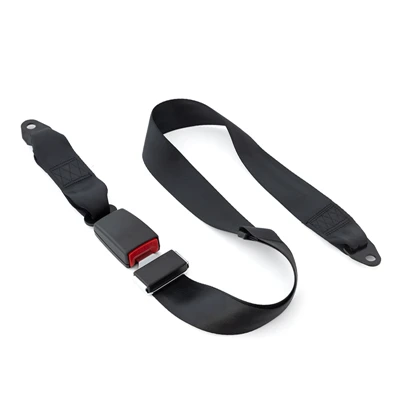
First off, let’s cut to the chase: convertibles aren’t the death traps some people make them out to be when it comes to seatbelts. Yeah, take the top off and suddenly your brain jumps to “I’ll fly out the window if something goes wrong,” but that’s exactly why auto seatbelts for drop-tops are engineered different (and better in some ways) than the ones in your average sedan. Let’s start with the basics most folks know but skip the details of: how seatbelts work in any car, then zero in on convertibles specifically.
Every standard seatbelt, whether it’s in a sedan or a Miata, has three main parts: the webbing (that thick, nylon strap you grab), the retractor (the thing it winds back into), and the buckle (what clicks into place). The retractor is the star here—most people think it just lets you pull the belt out to fasten it, but it’s actually a lock mechanism. When you’re driving normally, it spins freely, so you can move around, adjust the belt as needed. But slam on your brakes hard, or get in a crash, and that retractor locks up instantly. Why? Because the sudden jolt makes a little metal pendulum inside the retractor swing forward and catch on gears, so the webbing can’t pull out any more. That keeps you from lurching forward too far, hitting the dash, the steering wheel, or worse.
Now, convertibles have a twist. You’re not dealing with a roof above you—so the last thing anyone wants is for a seatbelt to fail when you need it most. That’s why auto seatbelt suppliers like us don’t just take a regular sedan belt and slap it in a drop-top. We adjust two key things: the retractor’s lock sensitivity and the anchor points. Wait, anchor points—those are the metal parts the belt is bolted to, right? In a sedan, front seat anchors are usually on the B-pillar (that vertical metal between front and back doors) or the floor. But in convertibles, we can’t always use a B-pillar because when you lower the top, that area disappears. So we move some anchors to the floor, or even to the side sills (those long metal bars under the doors). The other big tweak is the retractor’s lock trigger. In a sedan, the pendulum reacts to deceleration from the whole car. In a convertible, we add a little extra trigger—sometimes a motion sensor that picks up side impact too, since there’s no roof to protect you from a T-bone crash. That’s a game-changer, by the way—side crashes are where a lot of injuries happen in drop-tops, so the seatbelt has to react faster there.
Let’s talk about something I’ve had customers ask me a hundred times: “What if the top is down and I’m going fast—will the wind make the seatbelt unclip or not work?” Short answer: no. The retractor is designed to hold up against way more force than wind at highway speeds. We test those retractors in our lab all the time—we blast them with wind simulating 120 mph, yank the webbing as hard as a sudden stop, and they still lock. The webbing itself is also reinforced for convertibles; it’s thicker, has a higher tensile strength, so it doesn’t snap if you have to hold a passenger in place during a hard stop, even with the top off.
Another myth I hear all the time: “Convertible seatbelts are just lap belts, no shoulder belts.” That’s so 80s. Modern convertibles, even the cheap ones, have three-point seatbelts—same as sedans, just adjusted for the lack of roof. The shoulder belt might be anchored lower on the side sill, so it still crosses your chest and keeps you from hitting your head on the door, or worse, being ejected. Ejection is super rare now, by the way—seatbelts are mandatory in all US cars (and most countries) so that old “fly out the window” fear is basically unfounded if you’re wearing your belt.
Wait, let’s get into how we test these things, because that’s where the science comes in, not just marketing. As a seatbelt supplier, we don’t just build a belt and call it good. For convertibles, we do two big tests. First, static load test: we hook the belt to a 1,500-pound weight, pull it as hard as it would in a 30 mph crash, and make sure it doesn’t stretch more than 6 inches (any more than that and the person wearing it could slip out, or get injured from the belt digging into their chest). For convertibles, we also do a top-down crash simulation—we put a dummy in the seat, lower the top, drive it into a barrier at 25 mph, and measure how much force is on the dummy’s chest and neck. If the number’s too high, we go back and adjust the anchor points. Sometimes we add a load limiter—those are built into the retractor, so after the initial lock, they let a tiny bit of webbing out to spread the force over a longer time, which keeps from breaking ribs or getting whiplash. That’s extra important in convertibles because there’s no roof to absorb any of the crash force, so the seatbelt has to do all the work.
I remember a time a few years back, a customer brought in a vintage BMW convertible that he had modified the top on, and his seatbelt wasn’t locking right. He was convinced the old belts were junk, but when we took it apart, the retractor’s pendulum was stuck with dust from 20 years of top-down driving. We cleaned it, adjusted the lock sensitivity, and his belts worked like new. That’s the thing about convertibles: they’re more exposed to the elements—dust, rain, sun—so the seatbelts need a little extra maintenance sometimes, but as long as they’re checked every year, they’ll work just as well as any modern sedan belt.
Another thing people don’t think about: child seats in convertibles. If you have a kid in a car seat in a drop-top, the seatbelt has to be even more precise. We make sure the anchor points for LATCH (the child seat system) are in the same spots as sedans, but reinforced, because car seats are heavier and put more stress on the belt. We tested that last year with a little dummy child seat, crashed it at 20 mph, and the belt didn’t budge. Worth noting—never use a lap belt only for a child, even in a convertible. Three-point is non-negotiable.
Let’s bust one more common myth: “Auto seatbelts in convertibles don’t work as well because there’s no roof.” Nope, actually, in some crash scenarios, they work better. Wait, why? Because in a sedan, the roof might collapse a little in a rollover, putting extra force on the seatbelt. But in a convertible, a reinforced roll bar (which all modern convertibles have) takes some of that rollover force, so the seatbelt only has to hold the person in place, not also fight a collapsing roof. That’s a design win I didn’t expect when I started in this industry—convertibles have hidden safety perks, and the seatbelt is a big part of that.
If you’re a convertible owner reading this, take a minute to check your seatbelts the next time you get in. Pull the shoulder belt all the way out fast—if it locks right away, it’s good. If it just keeps pulling, the retractor might be dirty or broken, so get it checked. Don’t skip that—seatbelts are your first line of defense, especially when you’re cruising with the top down and life feels a little less serious.
For anyone in the auto industry looking for seatbelt solutions for your convertible line-up—let’s talk. We’ve been engineering auto seatbelts specifically for convertibles for years, with all the tweaks we talked about: adjustable retractor lock sensitivity, reinforced webbing, custom anchor points, and compliance with all the latest safety standards. We don’t just make one-size-fits-all belts—we work with you to match the specs of your convertible, whether it’s a sports car, a grand tourer, or an everyday drop-top. We’ve tested our belts in every kind of crash simulation, from side impacts to rollovers, and they hold up. So if you’re looking for a reliable seatbelt supplier that actually knows convertibles inside and out, hit us up to chat about your needs, no sales pitch, no jargon, just real solutions that keep drivers safe.
Now, quick note for all my gearheads out there—if you want to dive deeper into the science, here are the sources I use every day when we’re designing new belts. They’re straight from the safety and engineering teams, no clickbait or random blogs.
Racing Seat Belts References:
National Highway Traffic Safety Administration (NHTSA). "Seat Belt Systems for Passenger Vehicles." Federal Motor Vehicle Safety Standard No. 208, 2021.
Society of Automotive Engineers (SAE). "Performance Requirements for Convertible Occupant Restraint Systems." SAE International Standard J2288, 2020.
Insurance Institute for Highway Safety (IIHS). "Convertible Safety: Crash Test Findings." IIHS.org, 2022.
Automotive Seat Belt Manufacturers Association (ASBMA). "Design and Testing Guidelines for Open-Top Vehicle Restraints." ASBMA Technical Report, 2019.
Yangzhong Weian Mechanical and Electrical Co., Ltd.
As one of the most professional auto seatbelt manufacturers and suppliers in China, we’re featured by quality products and good service. Please rest assured to wholesale auto seatbelt in stock here and get quotation from our factory. Customized orders are welcome.
Address: Group 10, Xinhua Village, Xilaiqiao Town, Yangzhong City; West of The Bus Terminal On Yuanqu Avenue.
E-mail: hfsaml_2008@qq.com
WebSite: https://www.weianseatbelt.com/
