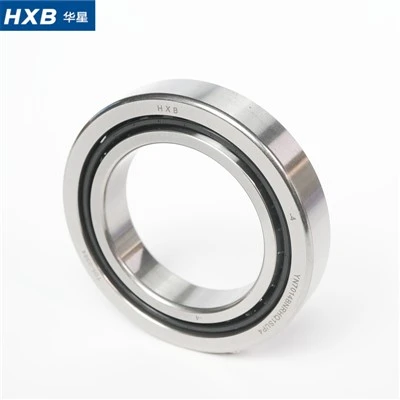
Surface roughness is a critical factor that significantly influences the performance of electric motor bearings. In my role as a supplier of electric motor bearings, I’ve witnessed firsthand the profound impact of surface roughness on these essential components. This blog post aims to delve into the intricate relationship between surface roughness and electric motor bearing performance, offering insights backed by extensive industry experience and scientific understanding. Electric Motor Bearings
1. Understanding Surface Roughness in Electric Motor Bearings
Surface roughness refers to the microscopic irregularities present on the surface of a bearing. These irregularities can vary in height, spacing, and shape, and they are typically quantified using parameters such as Ra (arithmetic average roughness) and Rz (average maximum height of the profile). In the context of electric motor bearings, surface roughness can occur on various surfaces, including the raceways, rolling elements, and cages.
The manufacturing processes used to produce electric motor bearings inevitably leave behind some degree of surface roughness. Processes such as grinding, honing, and polishing can reduce surface roughness, but achieving a perfectly smooth surface is practically impossible. Even small variations in surface roughness can have a substantial impact on the performance and longevity of the bearings.
2. Impact on Friction and Wear
One of the most significant effects of surface roughness on electric motor bearings is its influence on friction. Rough surfaces have more contact points between the bearing components, which leads to increased friction forces during operation. This increased friction can result in several negative consequences.
Firstly, higher friction generates more heat. In an electric motor, excessive heat can cause thermal expansion of the bearing components, leading to changes in the internal clearances of the bearing. This can, in turn, affect the alignment of the rotating elements and increase the likelihood of premature wear and failure. Secondly, the energy consumed in overcoming friction is wasted, reducing the overall efficiency of the electric motor.
Moreover, surface roughness also plays a crucial role in wear mechanisms. As the bearing rotates, the rough surfaces can cause abrasion and adhesive wear. Abrasion occurs when the asperities (peaks) on one surface rub against the other, scraping off material. Adhesive wear, on the other hand, happens when the asperities bond together under high pressure and are then sheared off during relative motion. These wear mechanisms can gradually degrade the bearing surfaces, leading to a decrease in performance and an increase in noise and vibration.
3. Influence on Lubrication
Lubrication is essential for the proper functioning of electric motor bearings, as it reduces friction, dissipates heat, and protects against wear. Surface roughness can have a significant impact on the effectiveness of the lubrication process.
A rougher surface can disrupt the formation of a continuous lubricant film between the bearing components. The asperities on the surface can break through the lubricant film, causing metal-to-metal contact. This not only increases friction and wear but also reduces the ability of the lubricant to carry away heat. In addition, rough surfaces can trap debris and contaminants more easily, which can further degrade the lubricant and cause damage to the bearing.
On the other hand, a smoother surface promotes the formation of a stable lubricant film. The film can effectively separate the bearing components, reducing friction and wear and improving the overall performance and reliability of the bearing. Therefore, controlling surface roughness is crucial for ensuring proper lubrication and extending the service life of electric motor bearings.
4. Effects on Noise and Vibration
Noise and vibration are important indicators of the performance and condition of electric motor bearings. Surface roughness can have a direct impact on the generation of noise and vibration in bearings.
When the bearing surfaces are rough, the interaction between the asperities can cause irregularities in the motion of the rotating elements. These irregularities can lead to vibrations, which are then transmitted through the motor housing and can be heard as noise. High levels of noise and vibration not only indicate poor bearing performance but can also cause discomfort to operators and potential damage to other components of the electric motor.
By reducing surface roughness, the motion of the bearing components becomes smoother, resulting in lower levels of noise and vibration. This not only improves the user experience but also enhances the reliability and durability of the electric motor.
5. Role in Bearing Fatigue
Bearing fatigue is a common failure mode in electric motor bearings, which occurs due to the repeated application of cyclic stresses. Surface roughness can significantly affect the fatigue life of the bearings.
Rough surfaces have stress concentrations at the asperities, which can act as initiation sites for cracks. Under cyclic loading, these cracks can propagate through the material, eventually leading to the failure of the bearing. By reducing surface roughness, the stress concentrations are minimized, and the initiation and propagation of cracks are delayed. This results in an increase in the fatigue life of the bearing, improving its reliability and reducing the frequency of maintenance and replacement.
6. Controlling Surface Roughness in Electric Motor Bearings
As a supplier of electric motor bearings, we understand the importance of controlling surface roughness to ensure optimal performance. We employ advanced manufacturing processes and quality control measures to achieve the desired surface roughness levels.
During the manufacturing process, we use precision grinding and polishing techniques to minimize surface roughness. These processes require careful control of parameters such as grinding wheel speed, feed rate, and coolant flow to achieve a consistent and smooth surface finish. In addition, we conduct regular inspections using advanced metrology equipment to measure the surface roughness of the bearings and ensure that they meet the specified requirements.
We also work closely with our customers to understand their specific application requirements and recommend the most suitable surface roughness levels for their electric motors. By providing high-quality bearings with controlled surface roughness, we help our customers improve the performance, efficiency, and reliability of their electric motors.
Conclusion
In conclusion, surface roughness has a profound impact on the performance of electric motor bearings. It affects friction, wear, lubrication, noise, vibration, and bearing fatigue, all of which are crucial factors in the overall operation and reliability of the electric motor. As a supplier of electric motor bearings, we are committed to providing high-quality products with controlled surface roughness to meet the diverse needs of our customers.
Electric Motor Bearings If you are in the market for electric motor bearings and are concerned about the impact of surface roughness on performance, we invite you to contact us to discuss your specific requirements. Our team of experts is ready to provide you with professional advice and solutions to ensure that you get the best bearings for your applications. We look forward to the opportunity to work with you and contribute to the success of your projects.
References
- Harris, T. A., & Kotzalas, M. N. (2007). Rolling Bearing Analysis. John Wiley & Sons.
- Eschmann, P., Hasbargen, H., & Weigand, E. (1998). Ball and Roller Bearings: Design, Application, Analysis. CRC Press.
- Stachowiak, G. W., & Batchelor, A. W. (2005). Engineering Tribology. Elsevier.
Hangzhou Huaxing Kechuang Holding Group Co., Ltd.
Hangzhou Huaxing Kechuang Holding Group Co., Ltd. is one of the leading manufacturers and suppliers of electric motor bearings in China, featured by quality products and good service. Please rest assured to buy bulk durable electric motor bearings from our factory. Welcome to view our website for more information.
Address: No.553 Yingbin Road, Linping, Hangzhou, 311100, China
E-mail: wmb@huaxingbearing.com
WebSite: https://www.hxbbearing.com/
